
Project Details
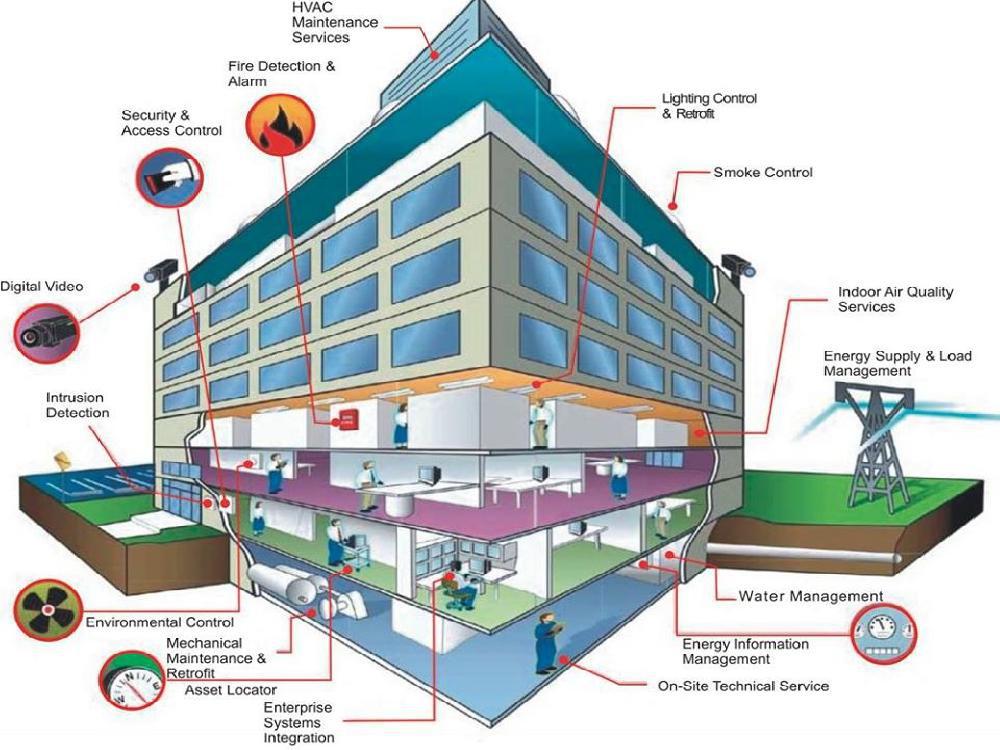
Integrated Building Management System (IBMS)
An integrated building management system (IBMS) is a centralized, computer-based system that connects and controls a building's various mechanical and electrical systems, including **HVAC**, **lighting**, **fire safety**, and **security**, on a single platform. By integrating these subsystems, an IBMS optimizes building performance by enhancing **energy efficiency**, improving **occupant comfort**, ensuring **safety**, and reducing **operational costs** through unified monitoring, control, and automated data analysis.
Key Features of an IBMS
- Centralized Monitoring and Control: An IBMS provides a single interface for operators to monitor and control all connected building systems, giving them comprehensive oversight of the entire building's operations.
- System Integration: It bridges disparate systems, allowing them to communicate and share data, which facilitates a more collaborative and efficient approach to building management.
- Energy Management: The system optimizes energy consumption by intelligently managing HVAC and lighting systems based on real-time data, reducing waste and lowering operating expenses.
- Enhanced Safety & Security: IBMS integrates fire detection, access control, and CCTV systems, enabling real-time alerts and automated responses to security incidents and emergencies.
- Automated Operations: By utilizing sensors to gather environmental data like temperature and humidity, the system can automatically adjust equipment settings to maintain optimal conditions and user comfort.
- Data Analysis and Reporting: The IBMS collects vast amounts of performance data, which can be analyzed to identify patterns, predict maintenance needs, and make informed decisions for future improvements.
Benefits of an IBMS
- Increased Operational Efficiency: Streamlined operations and automation lead to more efficient resource utilization and reduced manual intervention.
- Lower Operating Costs: Optimized energy use and proactive maintenance contribute to significant savings in utility bills and maintenance expenses.
- Improved Occupant Comfort: The system actively manages internal environments to ensure optimal temperature, air quality, and lighting for occupants.
- Enhanced Building Safety: Faster detection and response to safety and security threats improve overall occupant safety.
- Greater Sustainability: Reduced energy consumption and resource management contribute to a more environmentally friendly and sustainable building.